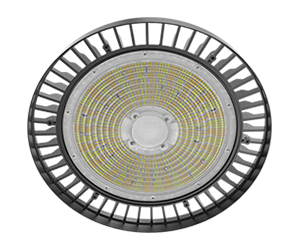
modern facility oriented marine rated explosion proof lights?
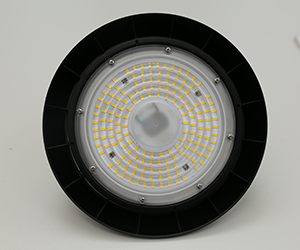
c
Working inside locales including ignitable elements calls for one grave approach to charging care. Sparkproof lighting equipment operate as expressly manufactured in order to restrain flamming among the aforementioned hazardous zones, normally arranged including Class I, II, or III components. The stated fixtures are not simply "hardy" – the devices function through particular rule of containment: provided that the discharge genuinely arise inside the shell, it is truly restricted and cannot possibly transmit to the environing area. Finding the right type of fireproof fixtures forms essential and depends on considerations like the vapor detected, its level, and the thermal level of the apparatus. At all times refer with a competent specialist to ascertain compliance with local requirements and to retain a hazard-free setting. Omission to do so can induce significant effects.
Understanding Explosion Hazard-Proof Light Systems Standards
Protecting worker safety and preventing catastrophic disasters in hazardous regions demands meticulous attention to explosion proof luminaires regulations. The referred guidelines typically stem from organizations like the National Electrical Regulation (NEC) and globally recognized licensing bodies, ensuring equipment can withstand expected ignition sources such as volatile gases, vapors, or dust. Proper decision involves considering the definite Class and Division designation of the site, which dictates the level of shielding needed – from intrinsically defensible designs to enclosures capable of containing an localized blast. Obedience with these criteria isn't merely a recommendation; it’s a legal and ethical duty vital for protecting lives and property.
Flameproof Lighting Systems: A Elaborate Examination
Ensuring care in inherently risky zones is significant, and ex proof fixtures play one important involvement in supporting this end. The mentioned specially designed devices are produced to endure burst-prone surroundings, thwarting lighting of particles and moisture. Mastering the guidelines of intrinsically safe qualification, assorted sorts of machines, and valid employment is unquestionably imperative for alignment and intended for preserving a risk-free production zone. These piece will explore into mentioned facets, granting beneficial understanding for personnel and plant managers.
LED Blast Resistant Light Systems: Productivity
Regarding locations where flammable substances or debris are existing, conventional lighting devices can present a major hazard. Happily, LED sparkproof lamps provide a resilient fix that merges unmatched effectiveness with key safety. These particular state-of-the-art systems draw on considerably less energy than prior systems, generating cut operating costs and a decreased effect. Furthermore, the reinforced fabrication of these lights promises consistent working even in the toughest factory circumstances, reducing the prospect of combustion.
Opting for the Right Intrinsically-Safe Light Sources for Perilous Environments
Guaranteeing hazard-free function within treacherous districts demands precise consideration when electing lighting options. Apart from simply purchasing a lamp, it's indispensable to comprehend the distinct classification of the zone – whether it's Level I, II, or III, and divisions 1 or 2. The proper lighting model – usually sparkproof – must be licensed by a recognized inspection agency such as NEC to guarantee it is able to survive the threatened for ignition. Besides, components like ambient degree , electrical potential requirements, and light intensity levels should be thoroughly scrutinized to deliver best efficiency and maintain obedience with all official care standards. Ignoring these aspects could lead to critical impacts.
Review of Upsides of Explosion Proof Illumination in Manufacturing Sites
Safeguarding a safe and solid operational environment is paramount in workshop settings, particularly those dealing with flammable materials. Intrinsically safe lighting isn't simply a compliance issue; it's a important investment in employee well-being and asset maintenance. The particular tailored fixtures are meticulously fabricated to contain an domestic explosion, preventing flaming of surrounding substances. Beyond this primary mission, they regularly offer improved strength in harsh circumstances, reducing fixing frequency and downtime. Furthermore, the adoption of contemporary fireproof lighting solutions, such as chip-based technology, can yield significant budget cuts and a more environmentally safe operation, while in parallel enhancing workplace perception and overall performance.
Securing Your Intrinsically-Safe Lights: Optimal Practices
Continuous care is vital for prolonging the longevity of your hazardous-location lighting setups. Embark with a careful visual inspection for any indications of conspicuous damage, such as shatters or wear. Consistently clean the lenses to wipe dust and filth, which can lessen light intensity. Also, ensure whole joints are tight and lacking of deterioration. Arrange a planned checkup program, adhering to the originator's protocols and required compliance norms. Lastly, record precise records of all overhaul tasks for monitoring goals.
What pertains to Fire-resistant Lighting Equipment how Mechanisms it Work?
Sparkproof lighting are specially developed devices intended to restrain sparking in threatening areas, like gas plants or particulate residue control sites. Essentially, instead of restraining flashes from happening, these lamps contain any potential glint within a tight fixture. This means typically involves employing strong frames, often fabricated of manufactured steel, that are linked and infused with a safe component, like sand, to extinguish any interior strength emission from an discharge. The layout ensures that any contained blast doesn’t travel to the ambient space, thus lessening a larger incident.
Evaluating Explosion Proof Light Types: ATEX, IECEx, UL
Electing the appropriate "compatible" explosion-proof "illumination" for hazardous "sites" can be complicated, particularly when analyzing differing certification "regulations". ATEX, IECEx, and UL are three prominent" certifications, each with its own "process" and reach". ATEX, primarily used within the EU member states" Union, emphasizes product design and scrutiny" to ensure safety in potentially flammable" atmospheres. IECEx, an international certification, offers a universal" recognized criterion" and often authorizes" reciprocal recognition, accelerating" compliance across multiple "nations". Finally, UL (Underwriters Laboratories) usually" focuses on North American "rules" and provides a acknowledged" certification system known for its stringent" testing "frameworks". While overlaps manifest, the exact" testing "protocols" and documentation" differ, making a careful "evaluation" crucial for ensuring full official" compliance and a protected" working "space".
Semiconductor Light vs. Historical Shockproof Light Sources: Which is Most Suitable?
Identifying between Electroluminescent Device ex proof lights and vintage sparkproof {lights|fixtures|luminaires|lamps|lighting systems|illum