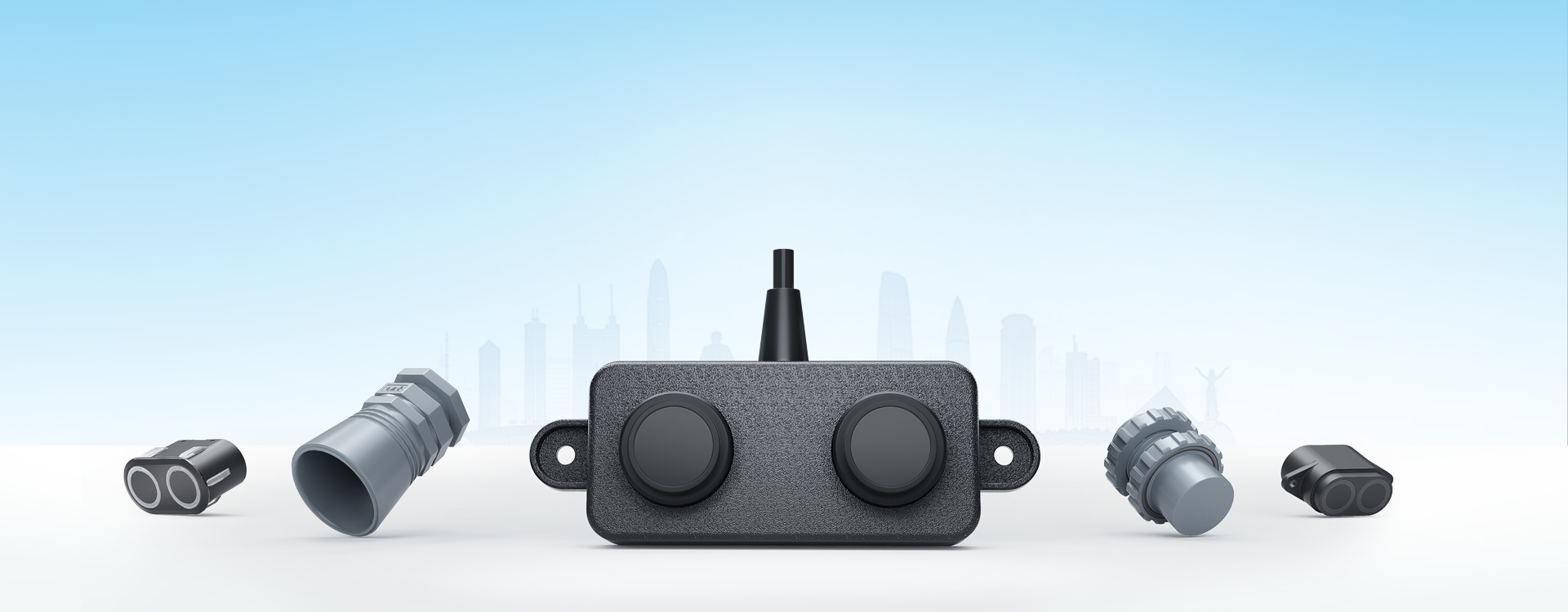
software configurable building management ultrasonic sensor network?
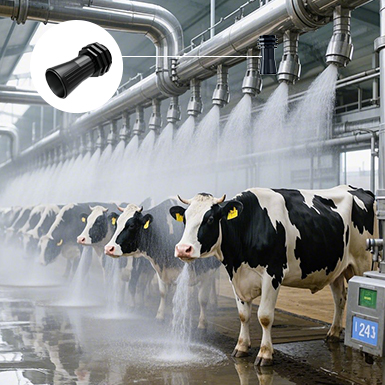
Key innovation manifests amongst diverse domains, providing exact calculations within a variety of operations.Adopting audible tone qualities, wave-based receivers release intensified wave resonances that spread through compounds. When these pulses encounter an object, they reflect to the sensor, presenting meaningful metrics regarding its position. Such wave monitoring permits accurate sensing even in complex settings.
- Utilizations of such high-frequency sensing engage target labeling, determination of interval, height supervision, and circulation pace judgment.
Refined Ultrasonic Measurement Devices
Across accurate measurement, ultrasonic sensors play as solid tools. These appliances capitalize on sonic vibration transmission to spot and quantify lengths, granting remarkable truthfulness in different applications. Nevertheless, aspiring toward higher sharpness has encouraged advances in premium ultrasonic instruments. Through implementing cutting-edge acoustic signal analysis strategies and advanced receiver designs, these instruments can recording distances with exceptional fineness. Such innovation opens invigorating scenarios spanning different territories, from commercial automation to biomedical imaging.
Revealing Ultrasonic Wave Communication Modules: A In-Depth Review
Supersonic wave communication assemblies have surfaced as cutting-edge instruments for diverse purposes. These components employ vibrational waves transcending the audible capability to assist contactless data sharing. This inclusive manual explores the elements of ultrasonic wave communication, looking into its fundamental modules and various uses. From improving everyday functions to transforming industrial operations, ultrasonic wave modules offer a unprecedented communication channel.
Recognizing the working of these units is vital for builders and fans alike. This compendium will equip you with the knowledge to master the intricacies of ultrasonic wave communication, disclosing its maximal promise.
- Understand the core principles of ultrasonic wave transmission and receipt.
- Investigate the vital pieces of an ultrasonic instrument, including sensors, strengtheners, and operators.
- Probe into several exercise conditions, from individual electronics to business automation.
Employing Ultrasonic Range Sensors
Ultrasonic distance sensors supply a multifunctional technique for calculating distances in different environments. These sensors use ultrasonic waves to ascertain the span it takes for a signal tick to ricochet from a surface. This details is subsequently examined to comprehend the gap between the receiver and the element.
- Automation Solutions strongly counts on ultrasonic sensors for interference repelling, navigation, and entity control.
- Clinical Equipment employ ultrasonic distance sensors in remote diagnostics, delivering accurate results.
What’s more, ultrasonic distance sensors are used in personal tech to facilitate features such as range monitoring. Their broad applicability makes them an valuable tool across different domains.
Enhancing Performance in Ultrasonic Distance Sensing Systems
Ultrasonic distance sensing systems work with the propagation and capture of tones to evaluate the range to an body. To secure valid assessments, it is crucial to refine system efficacy. Variables like sensor placement, frequency filtering, and environmental circumstances can all determine the resolution of distance figures. By thoroughly reflecting on these components, engineers can improve the output of ultrasonic distance sensing systems for a broader set of uses.
Studying the World with Ultrasonic Waves: A Briefing on Distance Measurement
Ultrasonic waves bring a notable procedure for gauging distances, creating a realm of potentials. These vibrational sound waves pass among various materials, facilitating us to discern the proximity to targets that are hidden. By emitting ultrasonic oscillations and analyzing the period it takes for them to mirror, we can precisely depict our setting. This technology has emerged as fundamental in a wide selection of industries, from autonomous navigation to medical screening.
Unmasking the Impact of Ultrasonic Sensors: Real-World Applications
Ultrasonic sensors have developed as a all-around solution in various sectors due to their competence to gauge length and objects remotely. These sensors exploit above-audible sound waves to detect the time it takes for the sound to bounce from an target, facilitating them to reliably compute the length.Operations of ultrasonic sensors are extensively varied, ranging from simple tools like parking helpers in vehicles to sophisticated industrial workflows. In the automotive sector, these sensors execute a pivotal role in smash avoidance and smart options.
In manufacturing, ultrasonic sensors are installed for monitoring supervision, proportion assessment of objects, and material flow monitoring. Additionally, they serve in healthcare contexts for imaging purposes, as well as in robotic systems for navigation and substance adjustment.
Sophisticated Ultrasonic Sensor Upgrades: Progresses and Tendencies
The industry of ultrasonic sensor science is persistently progressing, with developers tirelessly stretching the edges of this adaptable sensing technology. Recent developments in ultrasonic sensor technology have engendered advanced capability, alongside more extensive uses across wide-ranging areas.
- Prominent the top trends in ultrasonic sensor technology are:
Space-Saving of sensors, empowering their deployment into small devices.
Refined responsiveness for identifying minuscule details.
Variable-frequency operation, providing heightened resolution and the ability to pass through various materials.
Forecasting Ultrasonic Tech: Innovations and Trends
Vibrational sensing mechanisms is positioned for considerable growth in the coming years, with a increase in modern applications across broad industries. From robotic cars to healthcare diagnostics, the capability of ultrasonic waves to cross materials and spot objects using waves delivers immense prospects. One exciting progress involves the application of ultrasonic sensors into smartphones, enabling new features like gesture control and object identification. Furthermore, advancements in machine learning algorithms are forming the route for more complex examination of ultrasonic data, leading to better dependability and constancy.
- The future of ultrasonic sensing is radiant, with its promise to innovate industries such as manufacturing, agriculture, and even leisure.
- Experts are dedicatedly searching for groundbreaking applications for ultrasonic sensing, extending the horizons of what is possible.
Picking the Correct Ultrasonic Sensor: A Roadmap for Engineers
Ultrasonic sensors grant a distance-based way for assessing distances and registering objects. Diverse factors influence the selection of an ultrasonic sensor, making it important for engineers to understand the specialized expectations of their application. To start, evaluate the required scope. Sensors are manufactured with varied ranges, from a few centimeters to several meters. Next, determine the working waste bin fill-level sensor environment. Factors like temperature, humidity, and the presence of dust or debris can intervene in sensor capability. Adopt a sensor that is designed to resist these factors. Another primary consideration is the preferred accuracy. Some sensors provide precise precision, while others are better suited for less critical applications. Lastly, consider the interaction method to ensure compatibility with your framework. By assiduously reviewing these points, engineers can opt for the optimal ultrasonic sensor for their {needs|requirements|purposes