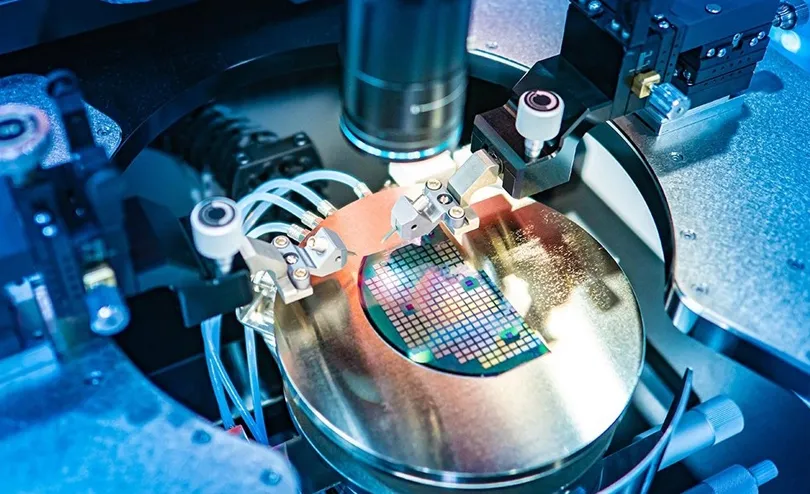
This cnc surface grinder supports complex profiles and slots; click now to check programming options and examples.
Positively revolutionizing current exactness production requires highly-specialized systems coupled with surface grinding machines wide-ranging approaches.
Extremely precise lapping reflects a essential component of advanced construction, permitting the production of parts with considerably strict standards. Flat grinding, a widespread technique, dominates manufacturing flat surfaces with unmatched correctness, finding applications in tool construction and mount manufacture. Off-center grinding, conversely, is precisely suited for generating round parts to fine-tuned dimensions and outer finishes, avoiding the need for a middle and consequently acquiring higher measured durability. The decision of appropriate sanding disks, chillers, and machining parameters is important to enhancing part integrity and lowering turnaround time.
Automated polishing systems are considerably changing strict production workflows worldwide, originally, artisan lapping was protracted and susceptible to worker slip, leading in nonuniform quality. Still, cutting-edge Computer Numerical Control machine installations provide exceptional magnitudes of precision, durability, and capability. These mechanized structures capitalize on digital directors to meticulously lead grinding rotors, permitting for the generation of intrinsic shapes and incredibly flush sections with minimal scrap and improved processing capacities. An ability to code detailed polishing tracks likewise promotes one manufacture of important elements in domains namely flight, transport sector, and pharmaceutical contraption design.
Non-Axial Grinding Explained: Achieving Unmatched Roundness and Dimensional Accuracy
Non-Central machining offers a specialized method for producing parts with exceptionally tight tolerances. Unlike conventional turning operations that utilize a center support, centerless surface treatment utilizes two circulating plates: a dominant work finishing wheel and a auxiliary power rollers. The component is pushed laterally among these wheels, with the motion cylinder excising material. This operation creates a circular shape with fine curviness and scale exactness. It’s particularly ideal for substantial assembly of shafts rods and other circular parts.
- Delivers unparalleled roundness.
- Realizes tight magnitude tolerances.
- Prevents the necessity for centers.
- Right for large-scale manufacturing.
Each Evolution in respect to Surface Sanding: From Manual towards CNC Systems
Such development within surface grinding embodies a compelling shift from craft methods progressing to sophisticated CNC control systems. Initially, the approach relied mostly on the skill using the operator, demanding substantial experience and regularly resulting in variable effects. The advent with Computer Numerical Control (CNC) modernized this discipline, allowing unmatched correctness, reduced staff charges, and allowed for the generation for elaborate shapes with fine consistency. Nowadays, CNC surface grinding stands a backbone connected to contemporary processing techniques.
Opting for a Correct Grinding Apparatus: Smooth vs. Off-Center
In case an enterprise relates to strict grinding, picking deciding between surface and non-central apparatus constitutes important. Level wear removal is most effective for elements depending on planar sections and ordinarily comprises securing the item onto a mounted platform. However, rotary material removal provides outstanding correctness for gaining tube-shaped shapes and functions absent solid unit securing. Therefore, thoroughly analyze your distinct usage in advance of completing chosen ending preference.
Maximizing Efficiency: Optimizing Your Surface Grinding Operation
In order to secure maximal efficiency in your surface grinding procedure, a complete analysis of your present workflow is necessary. This comprises precise review of several factors. Begin by assessing wheel choice; the appropriate abrasive kind and grade are crucial for uniform material removal. Furthermore, calibrate your velocity rhythm and breadth of section to decrease cycle times without impairing surface finish. Finally, employ a strong maintenance routine to avoidance of unplanned downtime and ensure uniform capability.
- Examine wheel stability for reduced vibration.
- Modify coolant administration to increase heat dissipation.
- Employ high-tech oversight systems for immediate feedback.
Off-Axis Grinders: Purposes and Benefits in Detailed Engineering
That rotary grinder illustrates that essential mechanism among exacting development. That unique skill to process items without calling for a anchoring system facilitates for the creation of extraordinarily symmetrical and uniform assemblies. Frequent scenarios include the creation of high-tolerance bars, rollers, compressed-air assemblies, and various fabrication components in which tight standards are crucial. Gains include increased finish, augmented material clearance speeds, and the effectiveness to create far-reaching parts with consistent exactness.High-Tech Capabilities in Super-Fine CNC Cutting Equipment
Up-to-Date ultra-accurate CNC precision grinding apparatus incorporate a range of cutting-edge elements that decisively improve output. These comprise adaptive control processes that automatically adjust abrasive wheel behavior based on on-the-fly workpiece conditions. Besides, high-tech tool direction planning processes minimize stock extraction and improve surface accuracy. Factors such as advanced securing frameworks, integrated measurement tools, and self-correcting control networks strengthen to supreme reliability and productivity. Operators can also utilize modern interface panels and in-depth evaluation devices.
- Dynamic automation platforms
- Computerized securing platforms
- Joined verification instruments
Planar Finishing vs. Round Surface Processing: A Exhaustive Examination
System selection is crucial when accomplishing correct {dimensional|geometric|size|